
Discussing fairer approaches to taxing the informal sector
The first ATI–ICTD webinar on tax and informality brought together research, workers’ experiences, and The Gambia’s reform plans to discuss how the informal economy can be taxed more fairly, transparently, and efficiently.
On 30 September 2026, the Addis Tax Initiative (ATI) and the International Centre for Tax and Development (ICTD) opened their Tax and informality series with the webinar Taxing informal sectors. Complicated questions and simplified regimes. Moderated by Eugénie Ribault of Expertise France, the session connected research with workers’ experiences and The Gambia’s emerging reform agenda. Developed under ATI Consultative Group 1, the series provides a space for researchers, tax practitioners and civil society to examine informal sector taxation and discuss alternatives that can expand the tax base without compromising equity.
The costs and limits of informal sector taxation
Vanessa van den Boogaard, Senior Research Fellow at ICTD, began by questioning an assumption that often attracts governments facing fiscal pressure: that a large informal economy represents a substantial untapped source of revenue. In low- and middle-income countries, where most people work informally, this idea is sometimes described as a “hidden fiscal goldmine”.
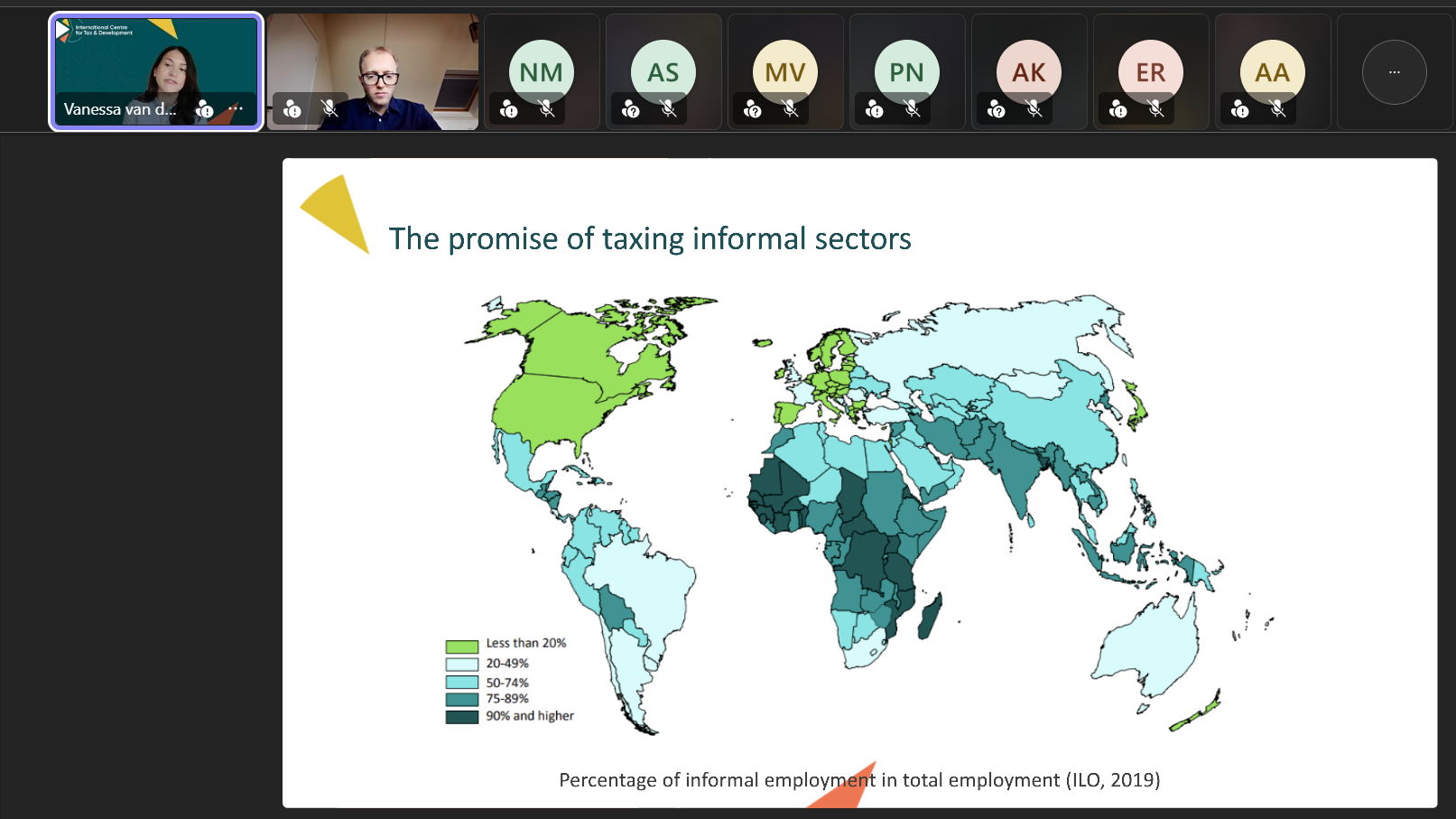
Despite the promise of informal sector taxation, common approaches often perform poorly on both equity and efficiency. They can place disproportionate burdens on people with very low incomes while generating little revenue.
Research by ICTD and Women in Informal Employment: Globalizing and Organizing (WIEGO) on informal-sector operators in Accra shows that people working informally already make multiple payments, including national and local taxes, licence fees, and informal payments. When measured against earnings, the effective tax burden is disproportionately high for the lowest-income earners.
To add to the issue of double taxation, Van den Boogaard highlighted the diversity of the informal economy, which includes both profitable businesses and micro-enterprises, as well as own-account workers with low and unstable earnings. Common approaches often fail to distinguish between these different activities, instead treating them in the same way. Local government taxes are typically set at a flat rate, while simplified tax regimes used at the national level often rely on income indicators that do not reflect actual earnings or ability to pay. She also noted the gender implications: women are disproportionately concentrated in smaller, lower-earning, and more precarious businesses or open markets, which are often more visible and therefore, more targeted by tax collectors.
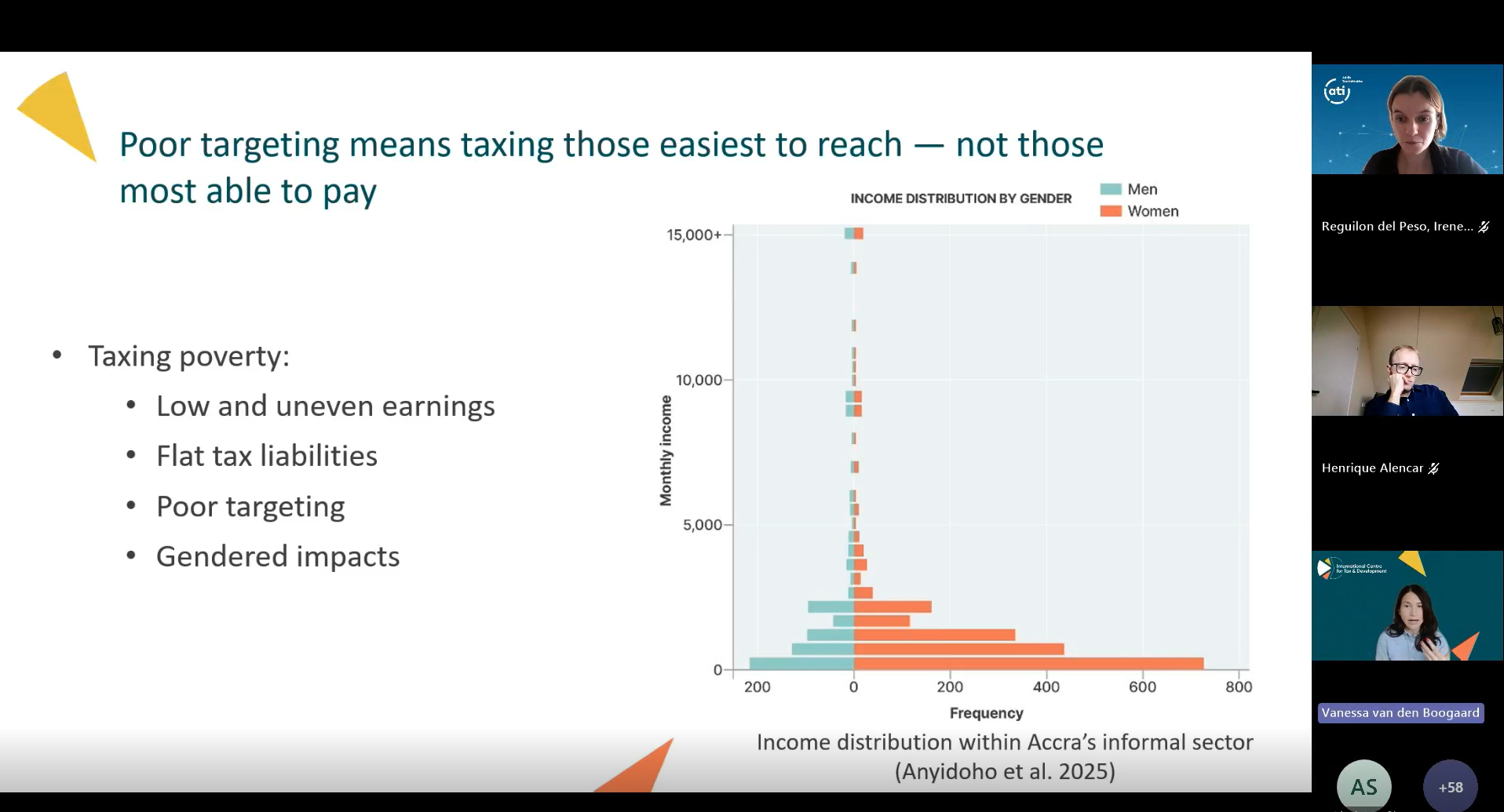
The large size of the informal economy does not necessarily mean that there is equally large taxable capacity or ability to pay taxes. Broadly, simplified tax regimes often generate little revenue and can have significant gender and equity implications. In Africa, 60% of simplified tax regimes have no minimum income threshold, meaning they may bring very low-income earners and enterprises into the tax net. Mass registration campaigns can also perform poorly: they may expand taxpayer registers without generating substantial tax payments. Greater attention should instead be given to identifying higher-income earners in the informal economy, she added.
Approaches to taxing the informal sector often end up taxing poverty.
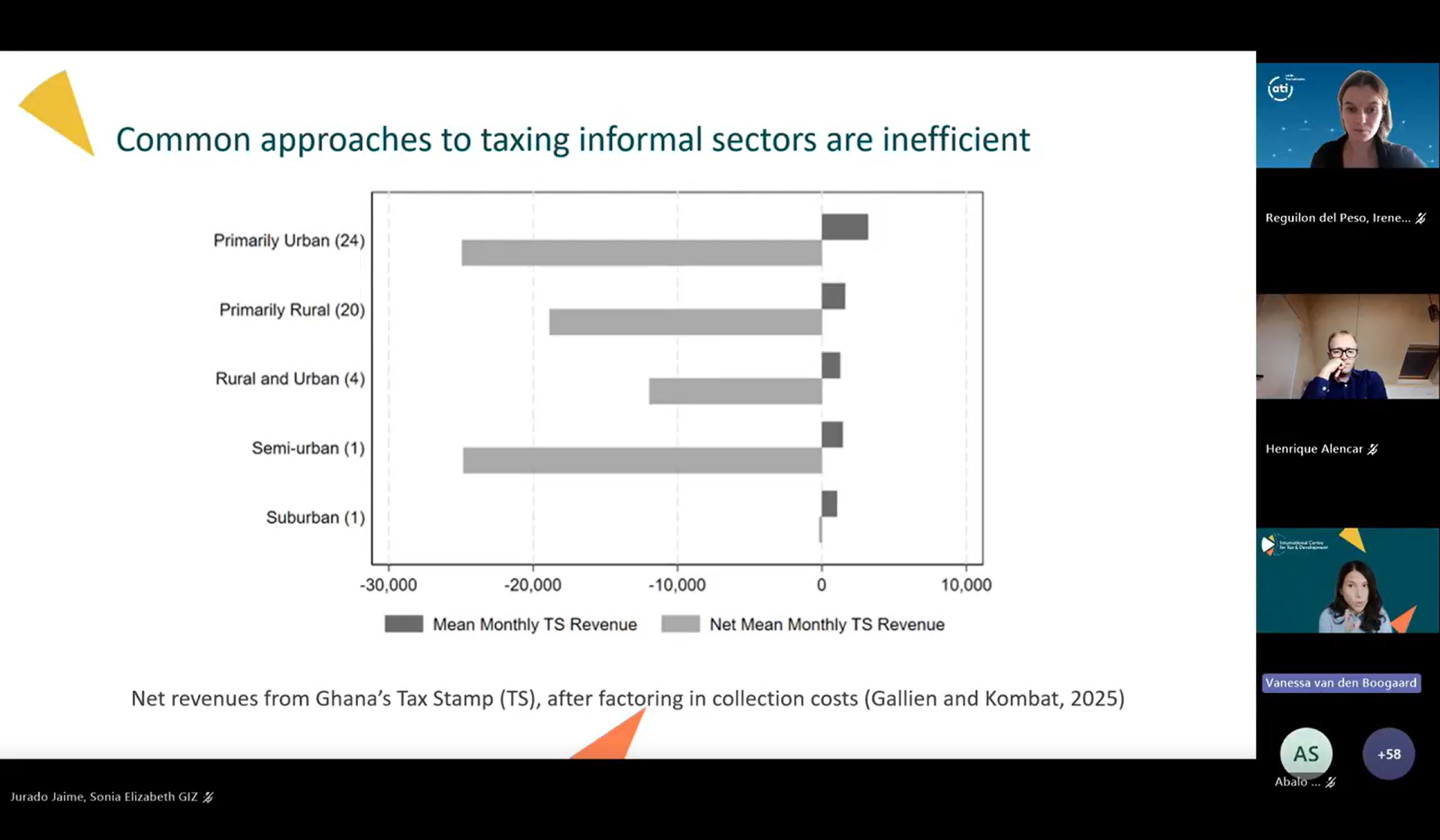
Research on Ghana’s Tax Stamp found that the tax costs nine times as much to collect as it generates in revenue. This illustrates how expensive it can be to collect very small amounts of tax from large numbers of geographically dispersed micro-enterprises.
Finally, Van den Boogaard also called for greater attention to non-revenue goals, such as building trust with taxpayers through a services-first approach and strengthening links with social protection.
Policy recommendations include setting minimum income thresholds to protect low-income earners from regressive tax burdens and improve the targeting of higher-income earners.
What do informal workers think about taxation?
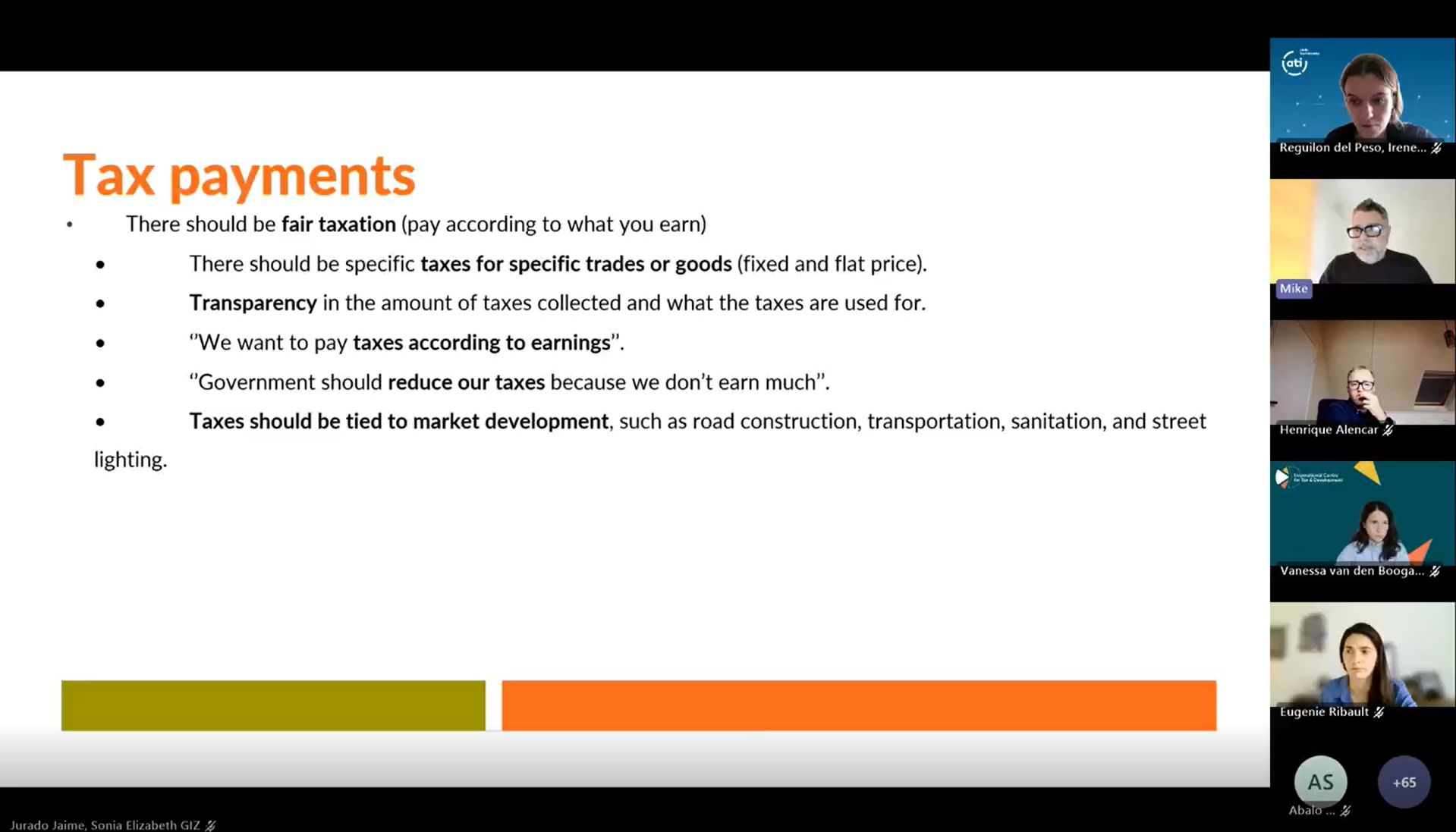
Mike Rogan, Research Associate with WIEGO and Associate Professor of Economics at Rhodes University, presented what informal workers say about taxes. Workers report that simplified tax regimes make it difficult to understand what they owe and where the liability comes from. This also creates a perception that taxation is unfair or arbitrary, as well as confusion about the distinction between national and local taxes, taxpayers’ rights and obligations, and what they can expect in return. Organisations that WIEGO works with have called for greater transparency about which payments are due, who collects them, and how tax revenues are used.
Overall, workers express disappointment with how taxes are levied and administered. However, WIEGO’s research shows that informal workers understand the importance of taxes and are not inherently opposed to them. They recognise that taxes are more acceptable when services are provided. The research suggests that informal workers can be partners in taxation rather than being treated as tax evaders, but questions of fairness and transparency need to be addressed. In this sense, he added that they can similarly contribute to designing fairer taxes and improving understanding of tax rules.
Informal workers can be partners in taxation but questions of fairness and transparency need to be addressed.
As an example, Rogan shared the demands of market traders in Accra, who wanted payments to reflect their earnings and improvements in their markets, including sanitation, street lighting and transport infrastructure.
The Gambia’s roadmap for informal sector tax reform
Alhagie Jallow, Director of Revenue and Tax Policy at the Ministry of Finance in The Gambia, presented the country’s plans to reform informal sector taxation, focusing on better distinguishing between businesses according to their economic activities and ability to pay, with digitalisation playing a key role in supporting this process.
Its new policy will differentiate between sectors and establish a minimum income threshold to protect subsistence-level livelihoods. This means that taxation will focus on income above this threshold, while also seeking to optimise tax compliance costs. “If you take 5% of the current informal sector, you would generate twice the value of what you are getting right now by taxing the whole informal sector”, remarked Jallow. This highlights the importance of segmenting businesses and applying risk-based approaches rather than treating all informal businesses alike.
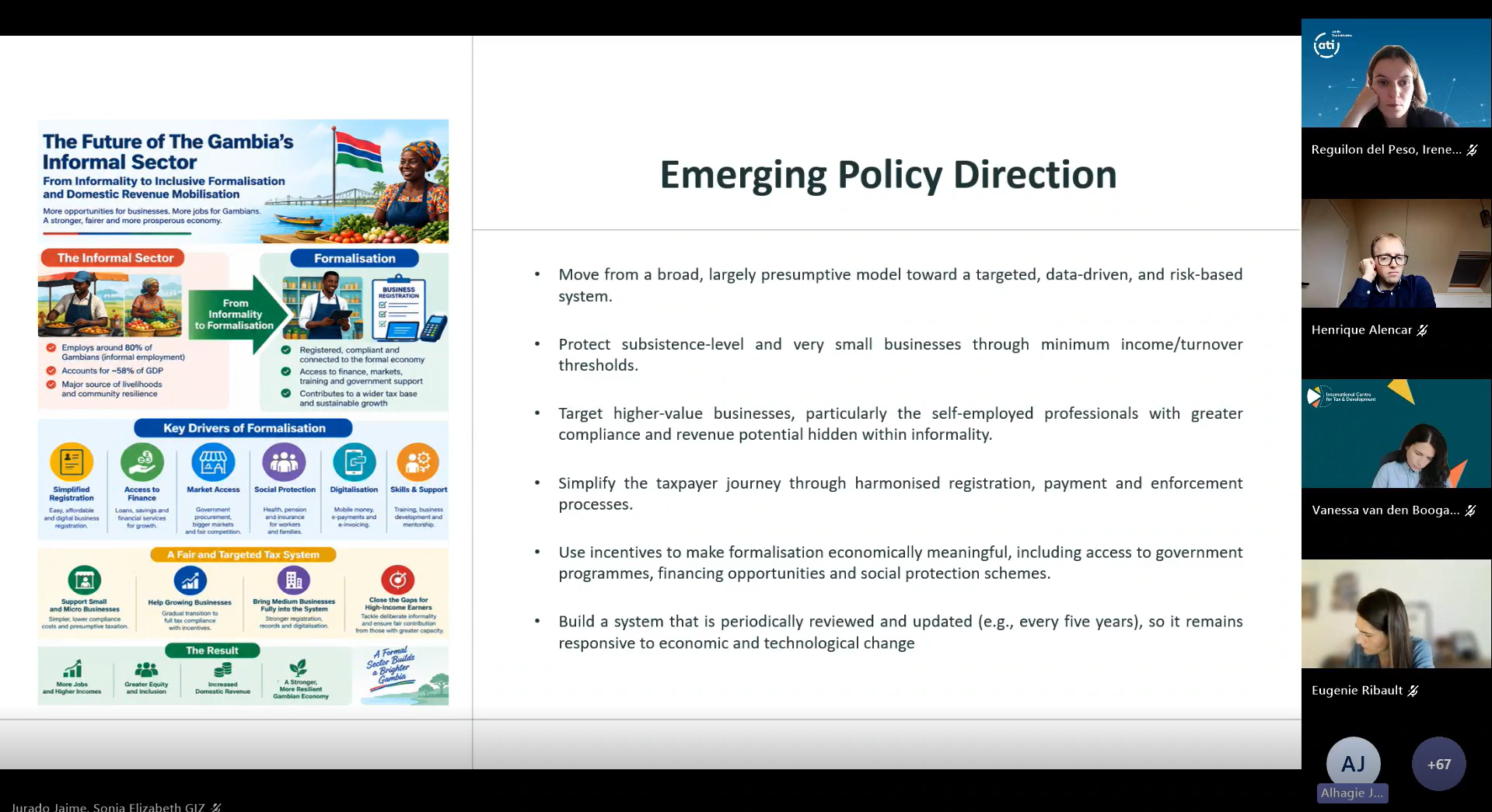
To support this shift, The Gambia aims to move towards a coherent system with lower compliance costs, fewer points of friction and greater accountability. Data and digitalisation are central to making compliance easier, enforcement feasible and the system more trustworthy for taxpayers.
Taxing according to capacity: a panel discussion
The panel discussion returned to questions of fairness and equity, including their gender dimensions. Henrique Alencar, advisor on Fair Tax at Oxfam Novib and co-coordinator of ATI Consultative Group 1, joined the discussion.
Rogan started stressing the need for greater taxpayer involvement in the design of taxes. Panellists agreed on the appropriateness of minimum income thresholds as practical measures to protect the most vulnerable. Vanessa van den Boogaard echoed the case for a services-first approach, and pointed to a gap in trust: taxpayers may prefer private or non-state service providers because they expect greater reciprocity, evidencing a lack of trust in services provided by the state. She also highlighted the gender implications, as women are concentrated among the lowest-income earners in the informal sector and often work in more visible settings, such as markets and retail, making them easier for tax collectors to target.
Alencar argued that a fair and equitable approach to taxing the informal sector should focus on highly profitable enterprises that choose to remain informal. On gender, he noted the imbalance of power and explained that tax collectors can easily target market traders, sometimes leading to abusive interactions. Jallow confirmed the predominance of women in markets in The Gambia and that they are easy to approach for tax collection. He also noted that The Gambia had mainstreamed gender in its new procurement law. As a practical example to contributing to fairness, he voices the possibility of addressing tax exemptions for major corporations rather than increasing the tax burden on small enterprises.
Panellists highlighted opportunities for fairer informal sector taxation through digitalisation, minimum income thresholds to protect the most vulnerable, and accessible data to better identify the circumstances of different groups of taxpayers.

The second webinar of the series will take place in December 2026. You can register for the series here.
The recording of the session is available here and you can also download the presentation.
Links of interest
ATI–ICTD collaboration to advance evidence-based approaches to tax and informality | ATI
Taxing informal sectors. Complicated questions and simplified regimes | ATI
Webinar | Taxing informal sectors. Complicated questions and simplified regimes | Presentation | ATI
ATI Consultative Group 1 | ATI
ATI Seville Declaration on Domestic Revenue Mobilisation | ATI