
From Evidence to Committed Action: Health Taxes Beyond Tobacco
Summary of Day 2 of the joint WHO & ATI workshop on health taxation.
On 23 July, the second day of the ATI-WHO workshop “Health taxes: country experiences and best practices in policy design and implementation” brought together around 120 participants together and shifted the discussion from building the case for health taxes to making reform work. While Day 1 established that health taxes raise revenue and save lives, Day 2 examined the two factors that most often stop them from doing either: tax designs that generate the wrong incentives and political processes that stall before legislation. Alcohol and sugar-sweetened beverages (SSBs) taxation present complex challenges. Whereas tobacco is a relatively homogeneous product with a well-established international playbook, alcohol spans from low-strength beer to high-proof spirits, while beverages range from bottled water to syrups and concentrates. Through country experiences, speakers showed how even well-intentioned reforms can raise revenue while undermining health objectives, and what it takes to build the political coalitions needed to carry reform through parliament. The day concluded with the ATI and WHO positioning the workshop as the start of a continued collaboration under the framework of the Seville Platform for Action and the commitment to the Sustainable Development Goals.
Opening the session, the moderator, Dr. Guillermo A. Sandoval, Economist (Fiscal Policies for Health) at the WHO, built on the previous day’s discussions. He highlighted that health taxes are becoming increasingly important as development financing constraints grow. Effective taxes require simple structures, broad product coverage and regular increases aligned with inflation and income growth. Concerns over illicit trade should reinforce tax administration efforts rather than delay reforms, while country experiences demonstrate that these taxes can deliver when backed by political commitment.
The global picture: why alcohol and sugar taxes lag behind
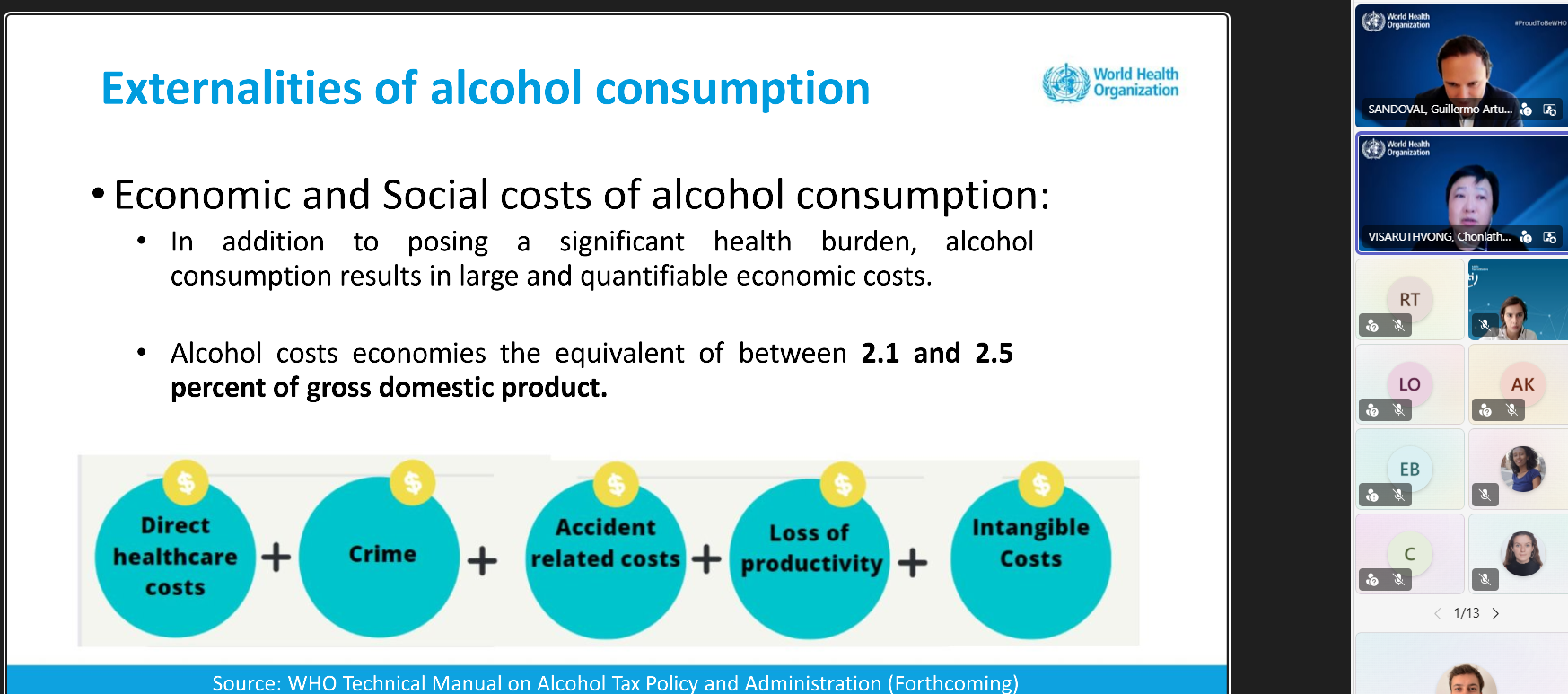
Dr Chonlathan Visaruthvong, Technical Officer in WHO’s Fiscal and Legal Measures for Health Unit at WHO, opened Session 3 by highlighting the scale of the problem. Noncommunicable diseases (NCDs) account for 75% of global deaths, with around 43 million deaths annually, including 18 million before the age of 70. Cardiovascular disease, cancer, chronic respiratory diseases and diabetes account for 80% of these premature deaths, disproportionally affecting low- and middle-income countries. Alcohol-related harms alone cost economies an estimated 2.1%- 2.5% of GDP when health, social and productivity costs are considered.
Despite this burden, consumption trends remain concerning. Beer represents around 77% of global alcohol sales by volume, while soft drink consumption continues to rise. Sugar-sweetened beverages (SSBs) are the leading source of free sugars, despite providing little nutritional value, contributing to rising obesity rates, with 46% of the world's population projected to be overweight or obese by 2030.
As with tobacco, taxes are effective only if they reduce affordability by raising the real relative price faster than incomes. While alcohol demand is relatively price-inelastic, tax increases can still reduce consumption while generating revenue. SSBs are more price-sensitive, and taxation can also encourage manufacturers to reformulate products towards lower alcohol or sugar content.
However, global practice still falls short. Although 167 countries apply excise taxes to alcoholic beverages, few adjust rates automatically for inflation, allowing their real value to erode over time. Wine is exempt in at least 25 countries. Volume-based specific excise is the most common system for beer and wine, while alcohol-content-based systems predominate for spirits. Excise taxes represent, on average, 20.9% of the retail price of the most-sold beer brand and 28.4% of spirits, but median levels are considerably lower at 14% and 22.5%.
For SSBs, progress is even more limited. While 116 countries apply excise to at least one type of SSB, fewer than a quarter consider sugar content when setting rates. Excise taxes accounts for only 9.7% of the average retail price of carbonated beverages, with a median of 2.4%. Most countries continue to exempt other sugary products, such as fruit juices, sweetened teas, coffee and milk-based drinks, while some apply reduced VAT rates to SSBs.
Visaruthvong concluded by highlighting implementation challenges. Diverse product categories create opportunity for substitution, while sugar-content based taxation may require verification systems that many administrations lack. As with tobacco, health taxes on alcohol and SSBs are most effective when combined with complementary measures, including warning labels, marketing restrictions and front-of-pack labelling.
South Africa: reformulation succeeds, but inflation erodes the gains
Nicole Vellios, Senior Research Officer at the Research Unit on the Economics of Excisable Products, University of Cape Town, presented South Africa's experience with SSBs and alcohol taxation, illustrating both the strengths of good tax design and the risks of weak implementation.
Introduced in 2018 after industry lobbying significantly diluted the original proposal, the Health Promotion Levy (HPL) taxes sugar content rather than beverage volume, exempting the first 4 grams of sugar per 100ml, with a rate of 2.1 cents per gram of sugar above this threshold - raised to 2.21 cents from April 2019.
The design proved effective: most manufacturers reformulated products to remain below the threshold, substantially reducing the sugar content, while estimated daily sugar intake from taxed beverages fell by around one-third when both consumer behaviour and reformulation are considered.
However, Vellios noted that the levy has not been adjusted since 2019. As inflation has eroded its real value, taxed beverages have become increasingly affordable, weakening both its health and revenue impact. She also challenged the industry claims that the levy would lead to widespread job losses. While beverage industry studies predicted significant employment impacts, subsequent independent research found no evidence that the HPL affected employment in sugar-related industries, with observed declines instead linked to the COVID-19 pandemic.
Turning to alcohol, Vellios explained that South Africa taxes beer and spirits according to alcohol-content, creating incentives to produce lower-strength products and aligning taxation more closely with health risks. Since these reforms, excise revenues have grown while per capita consumption has declined, with beer excise revenue reaching 0.3% of GDP and spirits 0.2% in 2025/26. Wine, by contrast, remains taxed by beverage volume, providing no comparable incentive. She concluded that concerns about illicit trade should strengthen tax administration rather than delay well-designed excise increases.
When design defeats intent: four country reforms
Evan Blecher, Economist with the World Bank's Global Tax Program, argued that tax reforms can raise revenue yet still fall short of their health objectives if rates are poorly calibrated. Alcohol is technically harder than tobacco to tax, he explained, because the products differ widely in strength and value chain, and because the externality is linked to the volume of ethanol rather than the volume of beverage, and because harm operates through both total consumption and its concentration among heavy drinkers.
The Philippines illustrates the challenge. Successive reforms substantially increased alcohol excise revenues, doubling their share of GDP, but beer taxes rose much faster than spirits taxes. As a result, consumers shifted towards higher-strength spirits, with tax-paid consumption increasing despite higher overall taxation. The effective tax on spirits per litre of pure alcohol remains among the lowest internationally relative to beer, making the more harmful product comparatively cheaper.
Kyrgyzstan demonstrated the opposite effect. While spirits taxes rose 129% in nominal terms, 36% in real terms, beer taxes stagnated in nominal terms, losing 41% of their real value, and consumers shifted modestly from vodka to beer. Blecher cautioned, however, that changes in the composition of alcohol consumption do not necessarily imply lower overall consumption.
Kenya highlighted another design challenge. A 2025 reform correctly shifted beer taxation from beverage volume to alcohol content, but the chosen rate reduced the effective tax for most beers on the market. This weakened incentives for producers to lower alcohol content and is expected to reduce both health benefits and government revenue.
Mongolia showed how poorly designed thresholds can undermine policy objectives. The country applies volumetric rates that vary by product and by alcohol-content tier, with a threshold at 40% ABV for spirits. Vodka accounts for around two-thirds of total alcohol consumption and is typically bottled at 40% ABV or above. A lower tax rate for spirits below 40% alcohol encouraged producers to reduce vodka strength only marginally – from 40% to 39% alcohol—to qualify for the lower rate, with little meaningful public health benefit.
Blecher concluded that choosing the right tax base is only part of the solution. Governments must carefully calibrate rates and thresholds to ensure reforms increase the effective price of more harmful products and support both health and fiscal objectives.
Sugar content as the tax base: encouraging healthier products
Turning to SSBs, Blecher highlighted considerable innovation in tax design, with an increasing number of countries taxing sugar content rather than beverage volume. He compared approaches in South Africa, the United Kingdom, the Seychelles and Mexico, noting that sugar-based taxes create stronger incentives for manufacturers to reformulate products and reduce sugar content.
The United Kingdom's Soft Drinks Industry Levy was presented as a leading example. Announced in 2016 but implemented only in 2018, the tiered tax - GBP 0.18 per litre above 5g of sugar per 100ml and GBP 0.24 per litre above 8g - gave manufacturers time to adapt. Reformulation began well before the levy took effect and exceeded expectations, prompting the government to revise its projected revenues even before implementation.
Blecher stressed that SSBs taxes should cover all non-alcoholic beverages containing free sugars, including soft drinks, fruit juices and sweetened dairy products – while excluding water, unsweetened dairy, and artificially sweetened beverages. Taxing products without free sugars weakens incentives for consumers to switch to healthier alternatives, whereas using sugar content as the tax base largely resolves these design challenges. He pointed out that several East African countries still tax bottled water and sugar-free soft drinks at the same rate as sugar-sweetened ones. Aligning taxes with sugar content, he argued, would strengthen health incentives while maintaining government revenues.
Blecher cautioned against taxing sugar as an input instead of taxing the final beverage. Using Uganda as an example, he showed that the tax on raw sugar adds only a negligible amount to retail price of a soft drink making it ineffective to change behaviour. He concluded that SSB taxes should primarily be viewed as a public health measure: while they can generate revenue, their greatest value lies in reducing sugar consumption and encouraging healthier products.
.

Health taxes in a financing crisis
Katherine Klemperer, Policy Analyst at the Center for Global Development, opened the last Session of the workshop by framing health taxes as a response to a widening development financing gap. Aid from major donors fell by 23% between 2024 and 2025, around 60% of low-income countries are in or at risk of debt distress, and 3.3 billion people live in countries that spend more on debt interest payments than on health or education. Meanwhile, many developing economies continue to face limited domestic revenue capacity, with more than 70 collecting less than 15% of GDP in taxes.
In this context, the revenue potential of health taxes is significant. Increasing taxes enough to raise prices by 50% - the ambition of WHO's 3 by 35 Initiative - could generate an estimated USD 3.7 trillion over five years. If directed to health, this would increase government health budgets by 12%, and by around 40% in low- and middle-income countries.
Klemperer stressed that the case for health taxes goes beyond revenue. They can reduce pressure on health systems by preventing costly diseases, while their health benefits are often greatest among lower-income groups, making them a progressive policy instrument. Unlike many other taxes, their intended “distortion” is precisely the behavioural change they seek to achieve: reducing consumption of harmful products and encouraging healthier choices.
She also challenged the idea that health taxes are politically divisive. Colombia demonstrates that support can extend across political divides, with successive governments of different orientations advancing tobacco, alcohol and SSB taxation. Public support is often substantial even among consumers of the taxed products: a 2022 survey in Mexico found that 77% of respondents supported higher tobacco taxes, including 72% of smokers.
Earmarking revenues for visible public benefits can further strengthen political support. The Philippines’ Sin Tax Reform Law, for example, directs most additional tobacco and alcohol tax revenue to health, helping finance around 90% of PhilHealth insurance premiums. Other countries are also exploring health taxes as a way to address the financing gaps created by declining aid, including Tanzania’s levy on alcoholic beverages to support its HIV response programme.
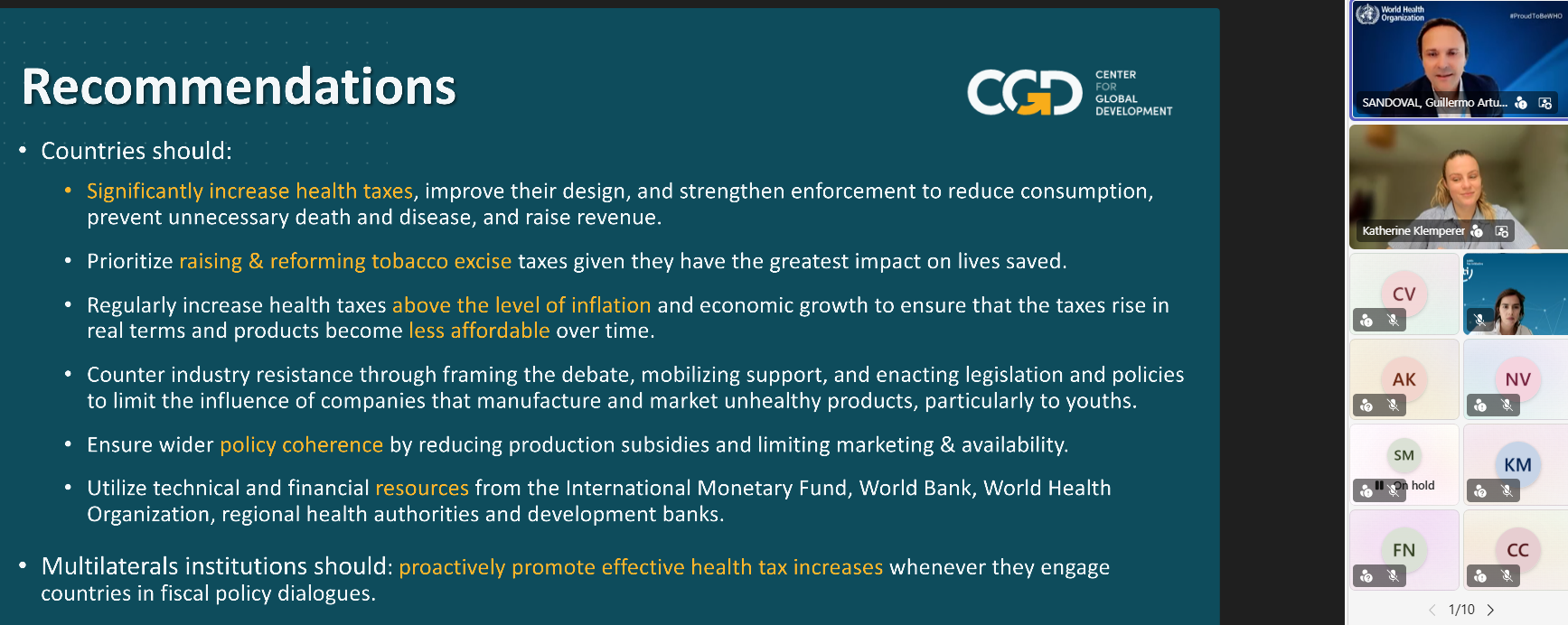
Klemperer concluded with a call for governments and development partners: to raise and redesign health taxes and strengthen enforcement; prioritise tobacco for its life-saving impact; increase rates above inflation and income growth; counter industry interference t and limiting the influence of manufacturers marketing to young people; and ensure that international financial institutions support effective health tax reforms in fiscal policy discussions.
Thailand: turning a surcharge into an institution
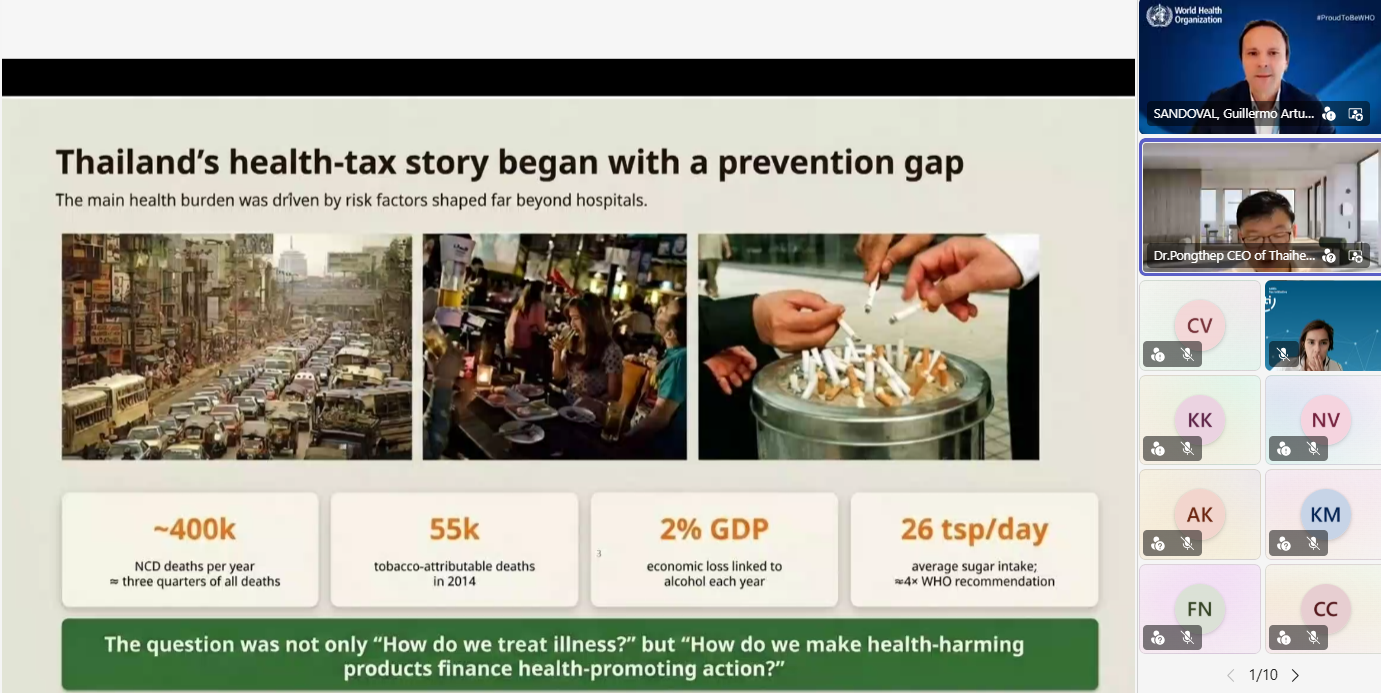
Dr Pongthep Wongwatcharapaiboon, Chief Executive Officer of ThaiHealth, presented Thailand’s innovative model for converting health taxes into long-term investment in prevention. Thailand's starting point was a significant prevention challenge. Noncommunicable diseases account for 75% of national deaths, with tobacco, alcohol and high sugar consumption contributing substantially to the burden. Rather than focusing only on treating the resulting illnesses, Thailand asked how harmful products could help finance the policies needed to prevent them.
The answer was a 2% surcharge on top of existing tobacco and alcohol excise taxes, paid directly by producers and importers to ThaiHealth, an autonomous government agency. The mechanism generates around USD 120-140 million annually while avoiding competition with general government revenues: the base excise remains with the Ministry of Finance, and the surcharge provides dedicated prevention funding. Similar levies in Thailand support areas such as sport development, elderly care and public broadcasting.
ThaiHealth’s role is of a catalyst rather than a service provider. Working across government, academia, and communities, it supports measures ranging from healthy urban planning and food safety standards to local prevention initiatives. The agency estimated a social return of 1.57-7.53 baht for every baht invested. Between 2001 and 2021, adult smoking prevalence fell from 25.5% to 17.4%, alcohol consumption from 32.7% to 28.0%, and annual road fatalities also decreased significantly. Thailand's SSB tax, introduced in 2017 and based on sugar content with rates rising every two years, further demonstrated the value of well-designed health taxes. It encouraged reformulation, with a 35% increase in low- and no-sugar beverages entering the market, while average daily sugar consumption declined from 27 teaspoons in 2016 to 23.7 in 2021.
Wongwatcharapaiboon concluded that Thailand’s model cannot simply be replicated elsewhere, but several principles are transferable: using health taxes as a long-term investment in wellbeing, creating platforms that connect health and finance actors, shaping healthier environments rather than relying solely on individual choices, translating evidence into policy, and building the capacity to respond to emerging challenges such as e-cigarettes and ultra-processed foods.
The Philippines: winning the legislation
Vice Chancellor Ma. Teresa S. Habitan of the Local Government Finance Institute, Philippine Tax Academy, returned for a second presentation, focusing not on the design of the Philippines’ sin tax reforms, but on how they were made politically possible.
She identified seven factors behind the reform’s success. First, the policy was framed as a health measure, developed in partnership with the health department, rather than primarily as a revenue initiative. Second, it benefited from strong political backing, with President Aquino supporting RA 10351 and President Duterte later advocating further increases in tobacco and alcohol taxes. Third, the reform was grounded in data and evidence but presented through a human lens: advocates linked the taxes directly to diseases and deaths caused by these products, recognising that data alone rarely wins political support. The fifth was continuous technical engagement with legislators to counter industry lobbying. The sixth was close cooperation with civil society and like-minded reformers to construct arguments the public would support. Lastly, a pragmatic approach to earmarking – “soft earmarking” – helped as a significant share of additional revenues was channelled through the Department of Health to support universal health care.
The results were reflected in both health financing and behaviour change. The Department of Health's baseline budget of PHP 42 billion in 2012 was significantly expanded through the health tax revenues, which increased from PHP 30.5 billion in 2014 to PHP 90.9 billion in 2019. Smoking prevalence fell from 25.4% in 2013 to 19.7% in 2024. Habitan drew attention to the stagnation between 2015 and 2018 as a warning sign that tobacco products were becoming more affordable again, contributing to the decision to approve further tax increases in 2019.
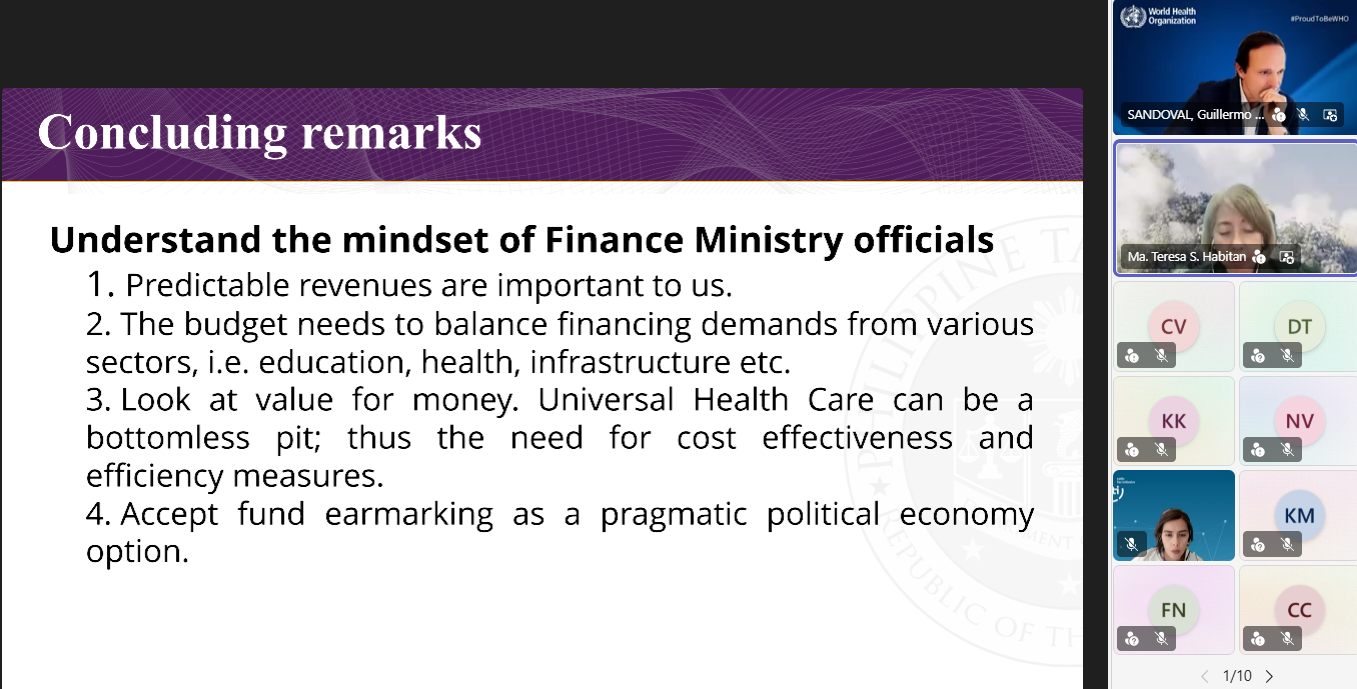
Her final message was addressed to health advocates seeking to advance similar reforms: understand the priorities of finance ministries, which must balance competing demands and consider revenues predictably, efficiency, and value for money. Earmarking, she argued, should be viewed pragmatically – as a political economy tool that can help build support for reform, even if it is not always the preferred economic approach.

Closing
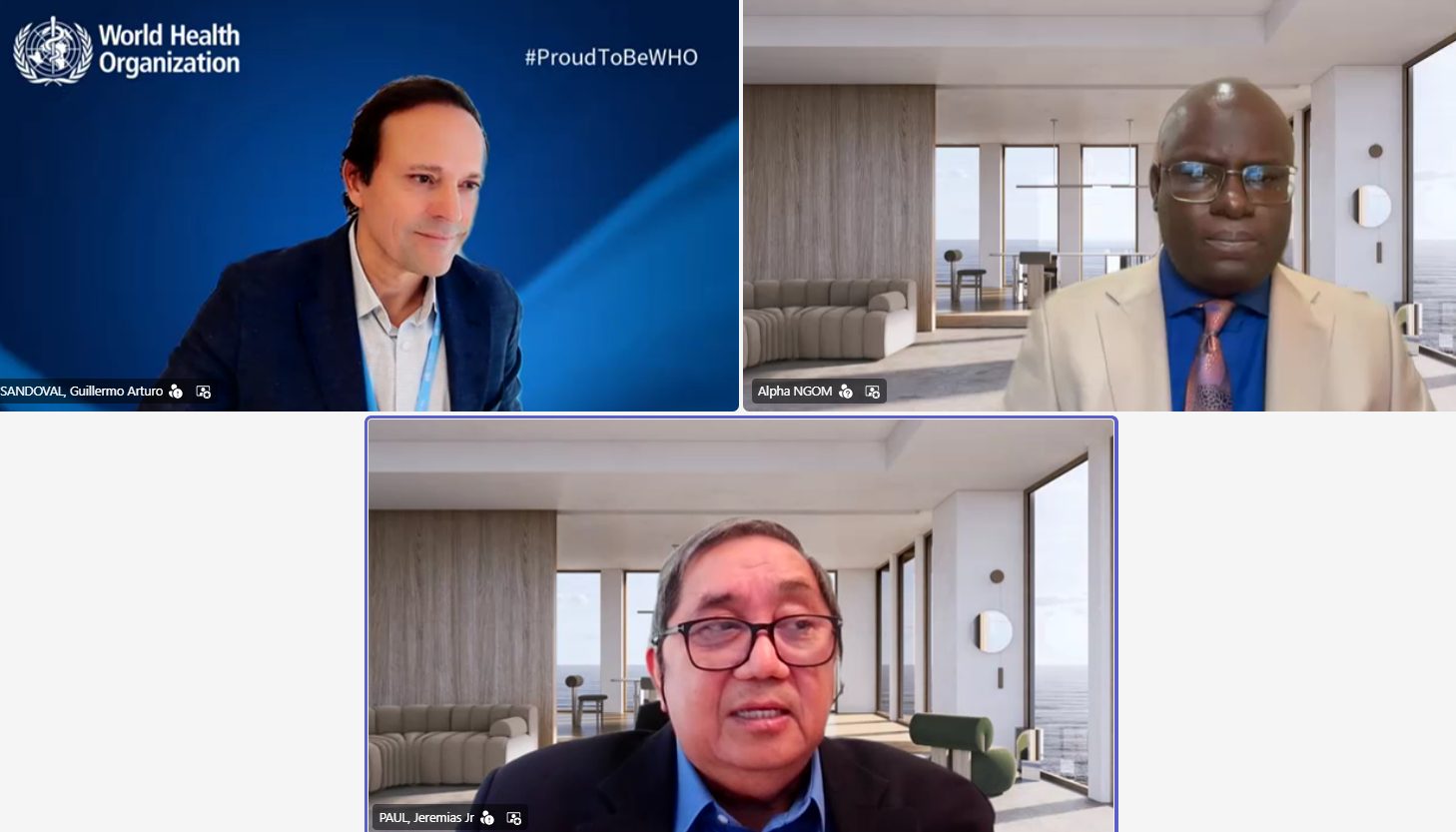
After a lively discussion on political economy challenges, the workshop was closed by WHO and ATI representatives. Jeremias Paul Jr. captured the workshop’s overarching message: the main constraint is no longer evidence or technical knowledge, but political commitment. Successful reform requires a whole-of-government approach and champions willing to build support for measures that advance health, fiscal sustainability and economic objectives. In his experience, the strongest and most widely shared argument is the protection of young people, a message that can bridge political divides more effectively than fiscal arguments alone.
Alpha Ngom, Senior Technical Advisor at the General Directorate of Taxation of Senegal and Co-Chair of the ATI Steering Committee, closed the workshop on behalf of the ATI. He echoed a central point from the discussions: sound technical design is essential, but reform also requires political leadership, coordination between finance and health authorities, and effective communication to address industry opposition. While national contexts differ, the workshop demonstrated that many countries face similar challenges and can draw on shared solutions. He framed the event not as an endpoint, but as a starting point for continued collaboration between the ATI- WHO to translate evidence into action
Dr. Guillermo A. Sandoval concluded the workshop by thanking all speakers and participants. He affirmed that the WHO, alongside the ATI, remain committed to supporting countries as they move from evidence to implementation, and that both organisations look forward to continuing this exchange in the months ahead.
Key takeaways | Day 2
Across two sessions spanning alcohol and SSB taxation, sustainable health financing, and the political economy of reform, several lessons stood out:
Design determines the outcome, and revenue is not the only measure of success. Countries’ experiences showed that technically sound reforms can fall short if not carefully calibrated. The Philippines, for example, significantly increased alcohol tax revenue but saw consumption rise, while Kenya and Mongolia highlighted the risks of poorly aligned tax structures and thresholds.
Monitor effective rates, not just headline rates. Governments should assess tax levels based on indicators such as tax per litre of absolute alcohol or per gram of sugar and evaluate how reforms affective relative prices across product categories before implementation.
Content-based taxes work because they drive reformulation. Experiences from South Africa, the United Kingdom and Thailand demonstrated that well-designed sugar taxes encouraged manufactures to reduce sugar content. Lower-than-expected revenues following reformulation should be seen as a sign that the policy is achieving its public health objective, not a failure.
Indexation is essential to preserve impact. Without automatic advisements, inflation gradually reduces the effectiveness of specific excise taxes. South Africa's Health Promotion Levy, unchanged s since 2019, illustrates how taxes can lose real value over time.
The scope of the tax matters as much as rate. Taxing healthier alternatives, such as bottled water, or taxing raw ingredients rather than final products, can weaken incentives for consumers towards healthier choices. Removing taxes on healthier substitutes while increasing taxes on harmful products is among the most cost-effective reforms available.
Industry claims should be tested against independent evidence. Experiences from countries implementing health taxes show that predictions of major job losses and large-scale illicit trade increases often do not materialise. Independent research and evidence-based dialogue are essential to counter misinformation and support effective policymaking.
Soft earmarking can help build political support. While participants acknowledged concerns around earmarking from a public finance perspective, there was broad support for approaches such as soft earmarking, which can increase visibility and public acceptance while preserving government budgetary flexibility.
The main challenge is political, not technical. The workshop concluded that the evidence base for health taxes is strong, but successful reform depends on political leadership, effective communication and broad coalitions. Framing reforms around protecting young people was identified as one of the most powerful messages for building support across political divides.
For more information on the case for health taxes and the deep dive into tobacco taxation, see our Day 1 coverage here: Taxing Harm, Funding Health: Country Experiences in Health Tax Design and Implementation