
Taxing Harm, Funding Health: Country Experiences in Health Tax Design and Implementation
Summary of Day 1 of the joint WHO & ATI workshop on health taxation.
On 22 July, more than 120 participants from nearly 50 countries gathered for the first day of the ATI-WHO workshop “Health taxes: country experiences and best practices in policy design and implementation". Co-organised by the ATI and the World Health Organization (WHO), the event explored how excise taxes on tobacco, alcohol and sugar-sweetened beverages (SSBs) can help governments simultaneously strengthen domestic revenues and improve public health outcomes.
Although the evidence supporting health taxes is well established, they are still largely underused. The reasons are rarely technical. Industry pushback, concerns about regressivity, weak coordination between ministries of finance and health, and limited administrative capacity prevent reforms from moving forward. In this context, the workshop focused on closing the gap between evidence and implementation. Combining global evidence from the WHO and the World Bank with country experiences from Africa and Asia, speakers explored how governments can design, communicate and implement effective health tax reforms.
The workshop was organised as part of the cooperation under the Seville Platform for Action (SPA), which brings together coalitions supporting the implementation of the outcomes of the Fourth International Conference on Financing for Development (FfD4). The Compromiso de Sevilla reaffirmed the role of health taxes and was followed by the launch of WHO's SPA “3 by 35” Initiative, which calls on countries to raise the real prices of the three health-harming products – tobacco, alcohol and sugary drinks (SSB)- by at least 50% by 2035. Through its Seville Declaration on Domestic Revenue Mobilisation (DRM), the ATI likewise commits to supporting countries in strengthening domestic revenues while advancing the Sustainable Development Goals (SDGs).
A triple win, and a narrowing fiscal window
Dr Tabea Lakemann, Senior Policy Officer at the German Federal Ministry for Economic Cooperation and Development (BMZ) and Co-Chair of the ATI Steering Committee, opened the discussion by framing health taxes as a “triple win”: they generate stable revenue, improve health outcomes, and strengthen fiscal resilience. Following the COVID-19 pandemic, she argued, domestic revenue mobilisation (DRM) has become increasingly critical for financing health systems sustainably and advancing universal health coverage (UHC). At the same time, she acknowledged the political barriers that continue to hinder reform, including industry interference and the persistent challenge of aligning ministries around a common evidence base.
Jeremias Paul Jr., Technical Lead for Fiscal Policies for Health at WHO, welcomed participants to the session as the first joint activity on health taxes between WHO and the ATI. Within the broader landscape of declining external development assistance, he described health taxes as low-hanging fruit for governments to expand fiscal space, while echoing a point that would recur throughout the day: the evidence is clear, and the decisive challenges are political leadership, effective communication and sustained implementation.
Ceren Ozer, Senior Economist and Global Tax Program Manager at the World Bank, then outlined the scale of the fiscal pressures facing governments. Official Development Assistance (ODA) fell by 23% in 2025, while development assistance for health is projected to decline by roughly 20%. If current trends continue, by 2030 combined government and donor health spending could decrease in 80% of low-income countries and 40% of lower-middle-income countries.
Against that backdrop, the revenue potential is far from marginal. Tobacco and alcohol excises together can generate revenues averaging close to 1% of GDP worldwide – approximately 0.6% from tobacco and 0.3% from alcohol – with similar performance across high- and low- middle-income countries. Revenue from SSB is considerably lower, estimated at 0.07% of GDP, reflecting lower tax rates, narrower coverage and more price-responsive demand. Nevertheless, Ozer emphasised the primary value of SSB taxes regarding in their public health impact and their ability to incentivise product reformulation.
Nigeria’s recent experience illustrated this potential. Between 2018 and 2023, revenues from tobacco and alcohol excise taxes increased by 274% in real terms, rising to 413% when the newly introduced SSB tax is included. Although revenue increases look modest relative to GDP, from 0.01% to 0.09%, the gains are significant in a country where total government revenue stands at 7.6% of GDP, and also challenged concerns raised by some stakeholders before implementation.
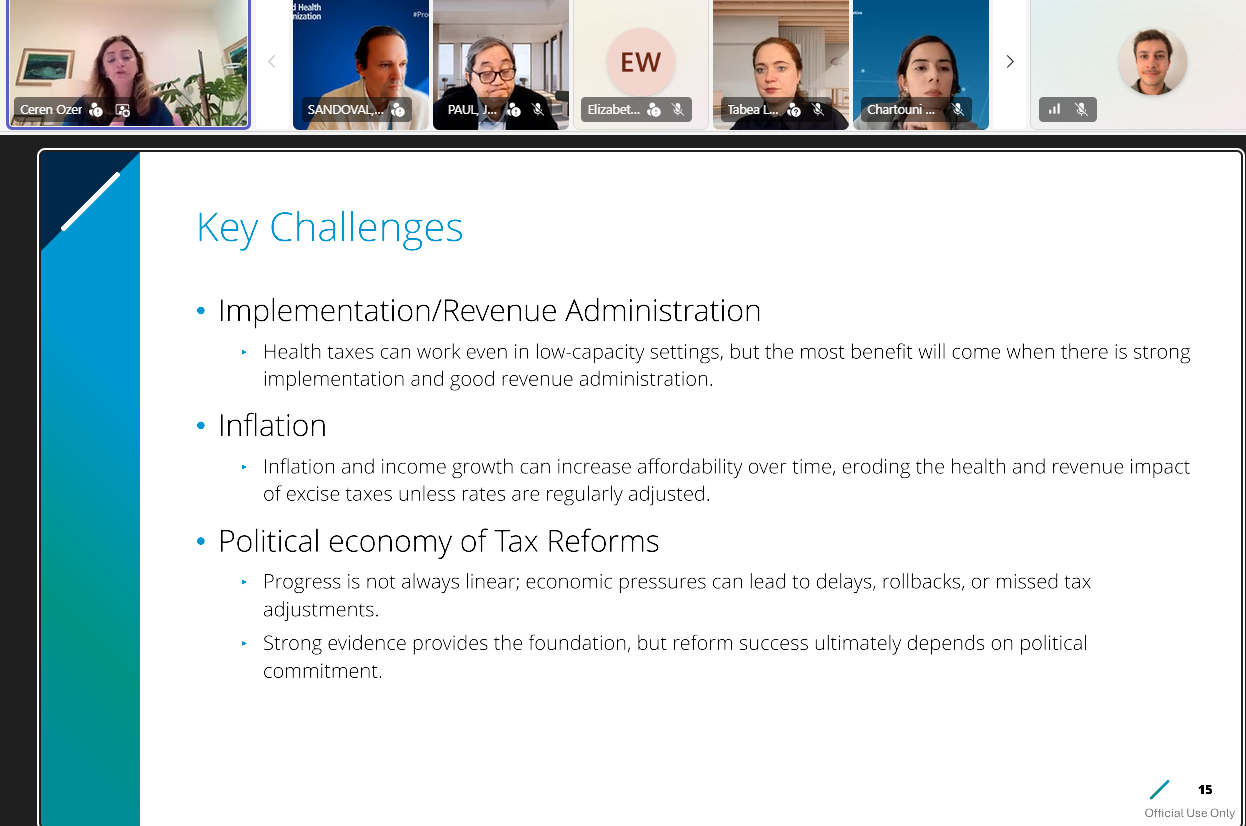
Ozer also addressed one of the most common criticisms of health taxes: that they disproportionately burden poorer households. Drawing on an extended cost-benefit analysis of tobacco taxation in Indonesia, she showed that once behavioural change is accounted for, health taxes are progressive rather than regressive. Lower-income households are generally more responsive to price increases, leading them to reduce harmful consumption to a greater extent, incur lower out-of-pocket healthcare costs and benefit from longer, healthier working lives. As a result, the largest net welfare gains accrue to the lowest income groups.
Finally, she discussed the use of health tax revenues. According to the World Bank, 72 countries and jurisdictions earmark revenues from health taxes across 173 expenditure priorities, such as preventive health programs, tobacco control, smoking cessation, and UHC programmes. At the same time, she cautioned that rigid earmarking is not the only route: countries have successfully built public confidence and linked revenues to spending priorities through sound public financial management practices, including programme budgeting, political commitment, and transparent tracking and reporting.
What makes a health tax work
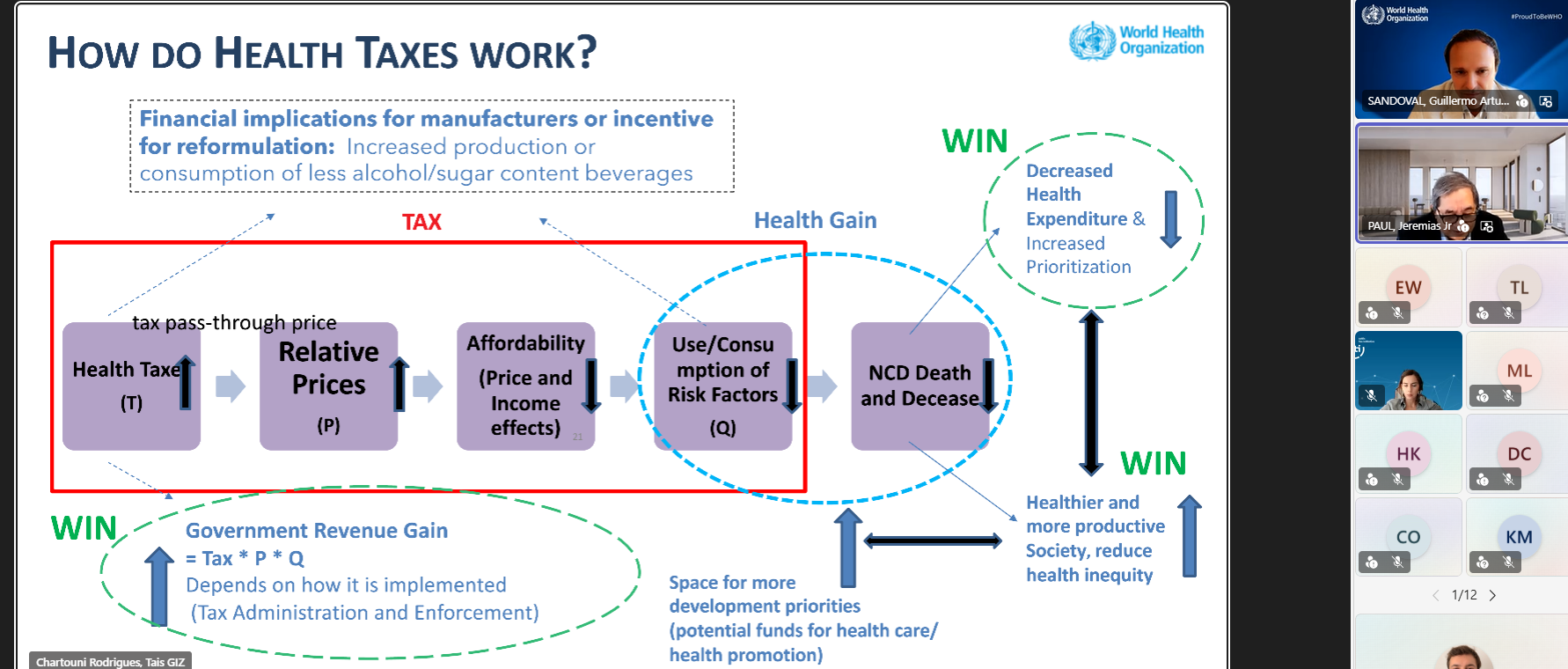
Opening the session on health tax design, Jeremias Paul Jr. returned to first principles. Health taxes address market failures by internalising both the external costs of harmful consumption, such as higher healthcare expenditure and productivity losses, and the internal costs that arise from addiction, imperfect information and present-biased decision-making.
He then outlined the key choices governments face when designing a health tax: defining the objectives, whether reducing consumption, protecting young people or raising revenue; determining which products fall in scope; selecting a specific, ad valorem or mixed excise structure; choosing the tax base; deciding between uniform or tiered rates; and ensuring the tax administration has the capacity to enforce the system effectively.
Throughout his presentation, Paul returned to a consistent message: good tax design should prioritise simplicity. Specific excise taxes generally outperform ad valorem ones; close substitutes should be taxed comparably to discourage consumers from switching to lower-taxed alternatives, while exemptions and preferential rates should be avoided. Ultimately, the effectiveness of a health tax depends on a clear chain of causality - from taxation to higher prices, reduced affordability, lower consumption, and ultimately, better health outcomes - which is why tax rates should be assessed in terms of their impact on affordability rather than their nominal level alone.
Despite the growing global recognition of these principles, implementation remains limited. At least 178 countries levy excise taxes on tobacco, but only 40 - predominantly high-income countries - had met WHO's combined tax share benchmark of at least 75% of the retail price as of 2024. Alcohol is taxed in at least 167 countries, but rates generally remain low and are rarely adjusted regularly to inflation. Around 114 countries tax SSB, yet relatively few have designed these to maximise their health impact. Paul attributed much of this implementation gap to a familiar pattern of industry opposition, which he summarised as the “SCARE” tactics: Smuggling and illicit trade, Court and legal challenges, Anti-poor rhetoric, Revenue reduction, and negative Employment impact. Governments, he argued, should expect each of these to emerge during reform processes – and be prepared to respond with evidence.
As a practical illustration of how tax design can change producer behaviour, Paul highlighted the case of the United Kingdom’s SSB levy. The government deliberately announced the tax well before its implementation, giving manufacturers time to reformulate products to reduce their sugar content. He concluded with a simple message that resonated throughout the workshop: countries should not be scared but bold in designing and implementing effective health taxes.
Administration is not an afterthought: lessons from Africa
Linstrom K. Marangu, Tax Specialist at the African Tax Administration Forum (ATAF), shifted the discussion from tax policy to implementation. His starting point was stark: African countries now spend more on debt servicing than on health and education combined. Public expenditure on health remains around 5% of GDP, well below the 15% target set under the Abuja Declaration, while external donor funding continues to decline.
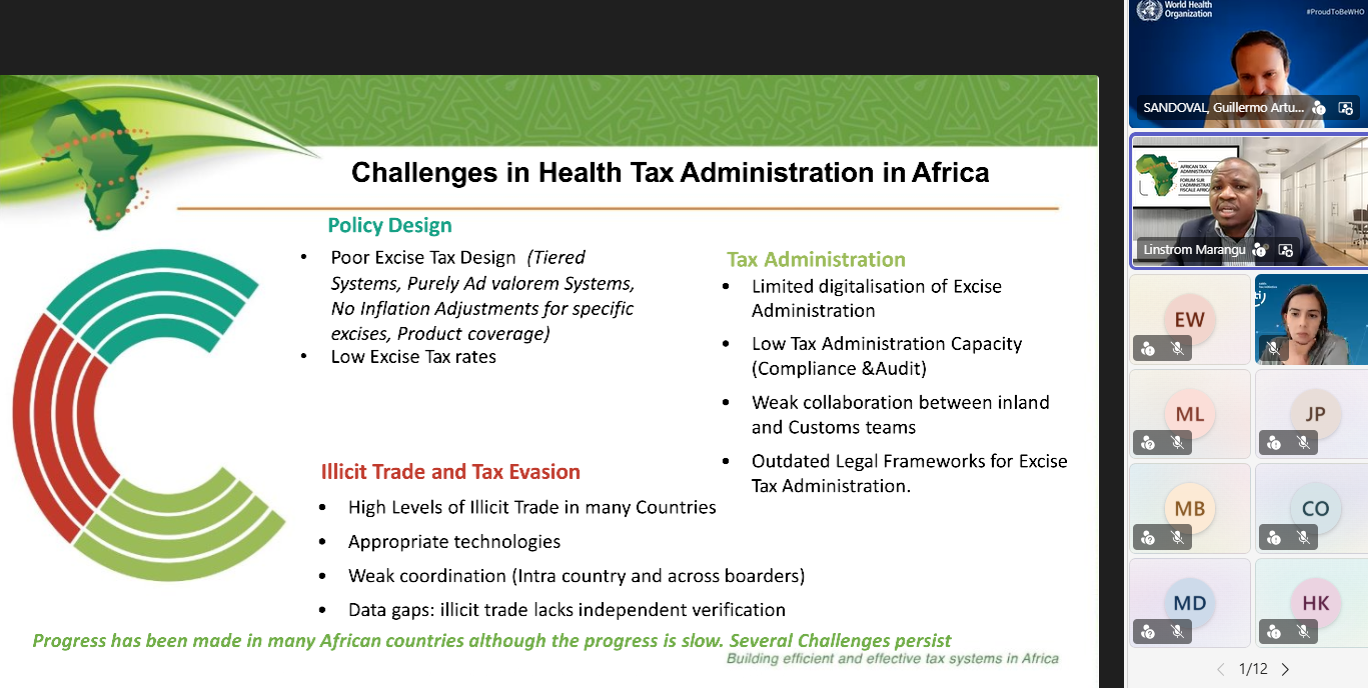
Marangu argued that strengthening excise tax administration is as important as getting tax policy right. The challenges, he noted, are highly practical. Many countries continue to rely on complex tiered structures or purely ad valorem tax structures, while specific excises frequently are often not adjusted to inflation, particularly in West Africa. Excise legislation in many countries dates to the 1980s and does not reflect modern production environments. Digitalisation is limited, with some administrations still processing excise returns and reconciliations manually. Coordination between domestic revenue authorities and customs is often weak, and data on illicit trade lacks independent verification, with governments often depending on industry-generated estimates.
Drawing on experiences from across the continent, Marangu demonstrated how administrative reforms can significantly improve both revenue collection and compliance. South Africa illustrated the importance of indexation and the cost of losing administrative capacity: without inflation indexation in the 1990s, the real value of tobacco excise taxes fell by 72% and revenues by 36%. Between 1994 and 2015, however, annual indexation above inflation helped triple excise revenues and reduce smoking prevalence from 33% to 27%. As enforcement capacity weakened after 2015, the illicit tobacco market grew.
Other country experiences highlighted the benefits of modernising tax administration. Mauritius raised its excise duty from Rs 5,111 to Rs 6,188 per 1,000 cigarettes between 2021 and 2023, increasing collections even as import volumes declined. In Tanzania, the introduction of electronic tax stamps in 2016 led to a 55% rise in average monthly tobacco excise collections, accompanied by a 17% rise in VAT revenues, reflecting the combined impact of digital monitoring, market surveillance and stronger enforcement. The Gambia collected more than eight times as much tobacco excise duty between January and August 2024 than in the same period of 2023 following the rollout of digital tax stamps, while Angola's high-security stamp programme lifted tobacco tax revenues by 985% in 2023.
Marangu concluded that effective health taxation depends not only on sound policy design and robust tax administrations. Countries should simplify excise tax structures, modernise outdated excise legislation, expand the use of digital tools such as electronic invoicing and track-and-trace systems, strengthen coordination within and across countries, and invest in independent data on illicit trade rather than relying on industry estimates.
Ghana: building the coalition that carried Act 1108
Dr Alex Kombat, Assistant Commissioner of the Research and Policy Unit at the Ghana Revenue Authority, presented Ghana’s experience with its recent excise health tax reform. He began by outlining the country’s public health context. In 2021, high blood pressure was the leading risk factor for death, accounting for, followed by air pollution, high blood sugar, and obesity. These trends underscored the need for fiscal measures to reduce the consumption of health-harming products while strengthening public revenues.
Ghana's excise regime covers alcoholic beverages, wines and spirits, tobacco products, carbonated and energy drinks, SSBs, bottled water and plastics, applied both to domestic production and imports. The Excise Duty (Amendment) (No. 2) Act, 2023 (Act 1108) introduced a comprehensive overhaul of this framework. Excise rates on mineral and energy drinks rose from 17.5% to 20% of the ex-factory price, while a new 20% rate was introduced for non-alcoholic beer and fruit juices. Beer produced with less than 50% local raw materials saw its rate increase from 20% to 47.5%, while wine rates doubled from 22.5% to 45%.
The most significant reform, however, concerned tobacco taxation. Ghana replaced its purely ad valorem excise of 175% of the ex-factory price with a mixed system combining a 50% ad valorem rate and a specific excise of 28 Ghanaian pesewas per cigarette, in line with Article 8 of the ECOWAS protocol. For the first time, electronic cigarettes and e-liquids were also brought into the excise tax system.
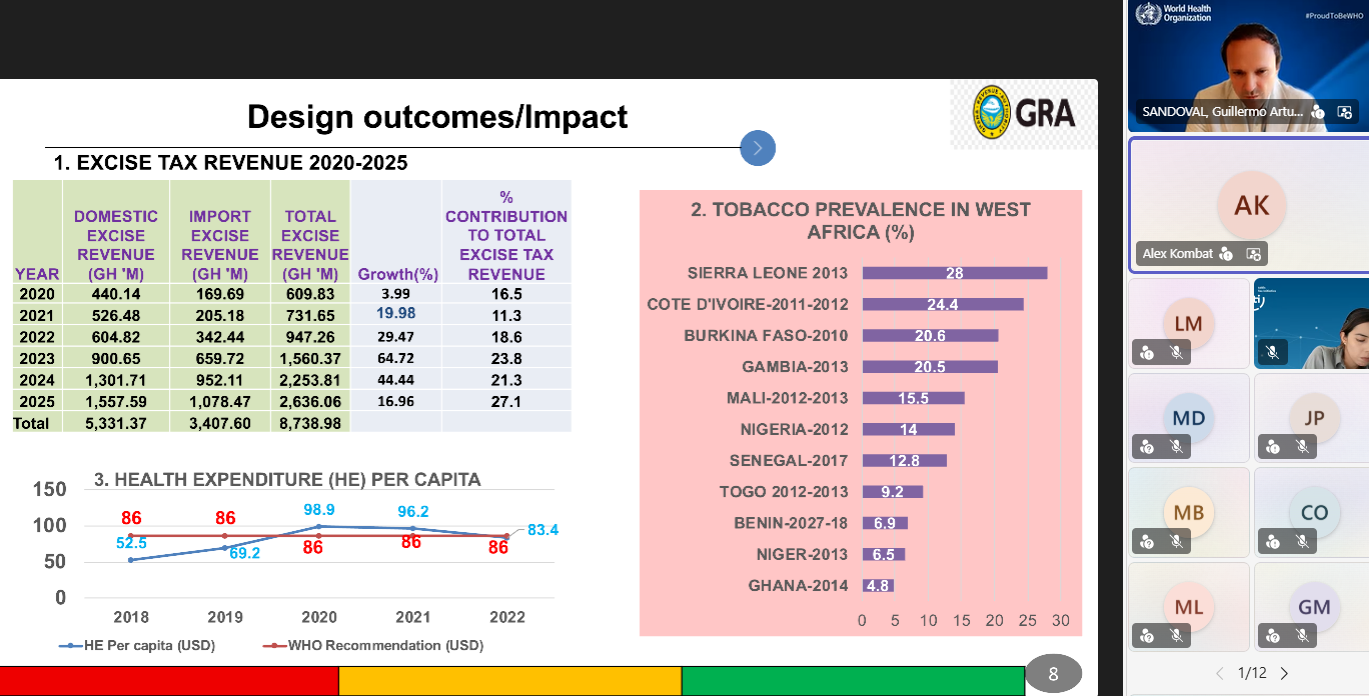
The reforms have already delivered measurable results. Total excise revenue rose from GH¢947 million in 2022 to GH¢1.56 billion in 2023, reaching GH¢2.64 billion in 2025. Retail prices also increased substantially: alcoholic beverages rose by around 120%, and a 20-pack of a leading cigarette brand rose from approximately GH¢21 to GH¢27. As a result, the tax share of the retail price of cigarettes increased from 16% to 47%, moving closer to the WHO benchmark. Ghana also reports the lowest tobacco prevalence among the West African countries in the comparison presented, at 4.8%. The country’s progress has been recognised internationally, receiving an “A” rating in the UNDP Health Tax Index for both tobacco taxation and enforcement, while lower scores remain for alcohol taxation and broader non-communicable disease (NCD) prevention.
Kombat attributed the reform's success to a coalition of five actors engaged across a ten-phase policy process running from January 2022 to its enforcement in October 2023: political leaders in the executive and legislature, industry representatives, government officials from the Ministry of Finance and the Ghana Revenue Authority, civil society and academia, and the wider public. Civil society organisations played a particularly important role by issuing public statements, organising workshops, engaging the media and maintaining pressure when the bill stalled in Parliament.
Kombat concluded that sustained political commitment ultimately determined the outcome. Strong government support meant that industry opposition could not prevent the legislation from being adopted. Looking ahead, Ghana’s priorities include introducing automatic inflation indexation, a track-and-trace system aligned with the FCTC Protocol to Eliminate Illicit Trade in Tobacco Products, and earmarking a share of health tax revenues to finance the prevention and treatment of NCDs.
The Philippines: from “sin taxes” to universal health care
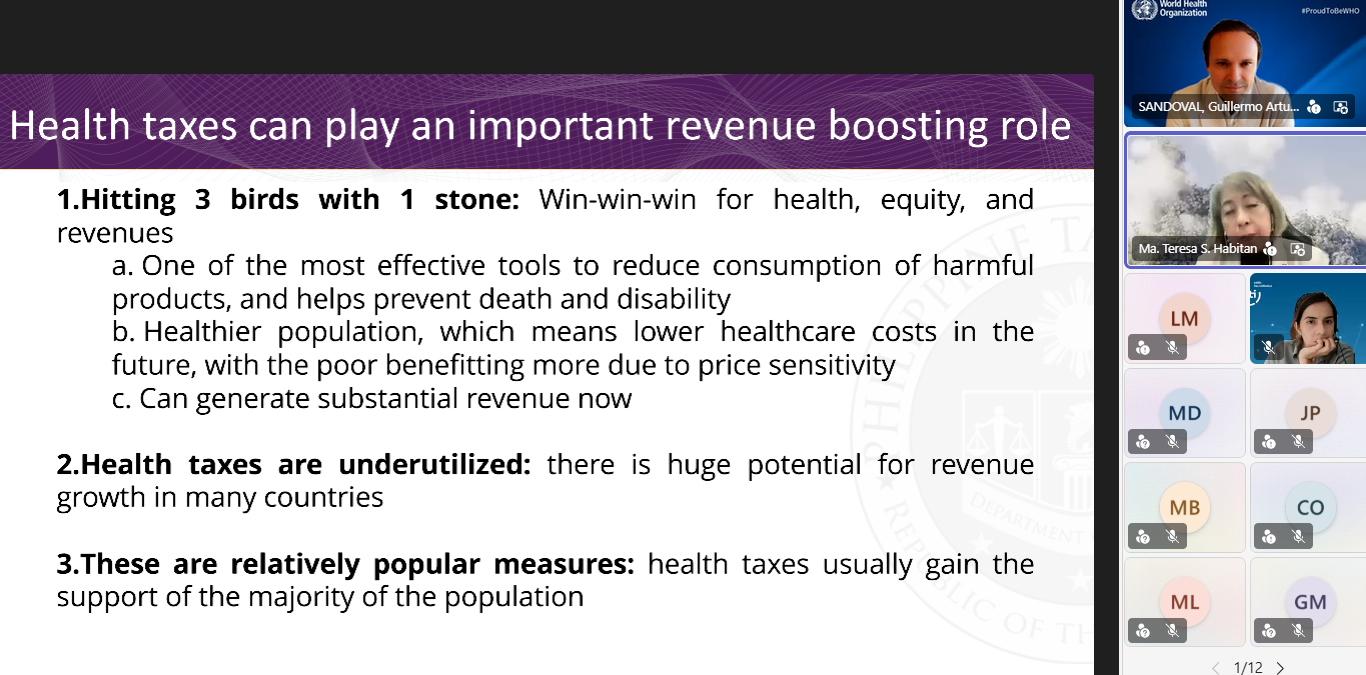
Vice Chancellor Ma. Teresa S. Habitan of the Local Government Finance Institute, Philippine Tax Academy, presented what she described as the “mother reform”: Republic Act No. 10351, enacted in 2012.
She began with a framing point that proved consequential. The deliberate shift from the term “sin taxes” to “health taxes” was a strategic repositioning by the Department of Finance, helping legislators who viewed these measures primarily as revenue instruments to recognise their broader public health rationale. The reform overhauled a highly complex excise system that differentiated cigarettes by price, brand age and origin. It removed the price classification freeze and tax advantages enjoyed by legacy brands, unified excise rates for cigarettes and fermented liquors, introducing a mixed structure for distilled spirits, and established automatic rate adjustments linked to inflation.
The results were significant. Tobacco excise revenues increased more than fivefold from around USD 1 billion in 2012 to USD 5.6 billion in 2023. A significant share of the incremental revenue was allocated to support universal health care, helping sustain PhilHealth coverage for all Filipinos and funding expanded outpatient services and access to medicines. The reform’s health objectives are explicit: reducing smoking prevalence to 15%, preventing more than 500,000 smoking-related deaths and achieving a 10% reduction in harmful alcohol consumption.
The Philippines’ experience with its SSB tax, introduced in 2018, offers another important lesson. Congress approved a two-tier system: PHP 6 per litre for beverages containing caloric or non-caloric sweeteners and PHP 12 per litre for those using high-fructose corn syrup. According to Habitan, manufacturers responded by substantially reformulating their products to avoid the higher rate, meaning that government revenues from the PHP 12 category have remained limited. While this may represent a shortfall from a revenue perspective, it demonstrates the behavioural effect the differentiated rates were designed to achieve and provides a useful caution for finance ministries estimating revenues from tiered SSB taxes.
The global picture on tobacco taxation
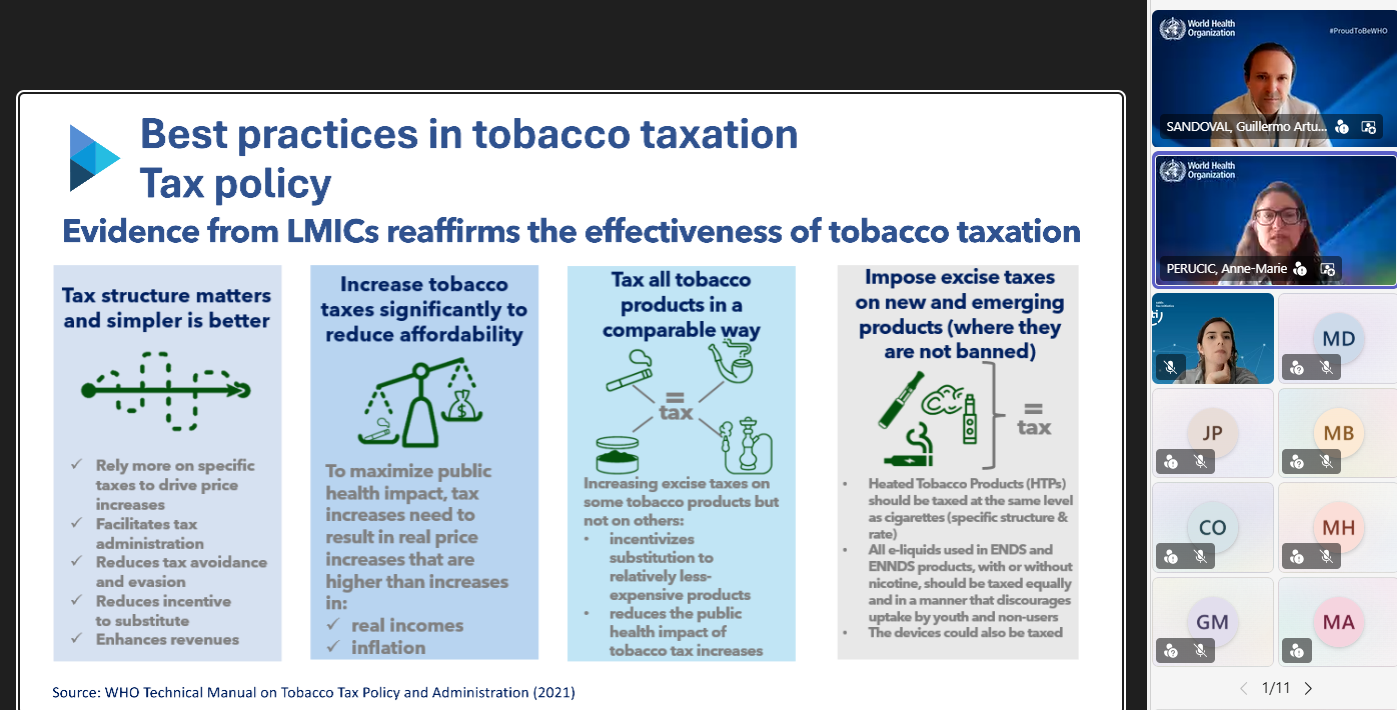
Opening the deep dive session on tobacco taxation, Anne-Marie Perucic, Health Economist (Fiscal Policies for Health) at WHO, began from with a simple but fundamental distinction: taxes themselves do not influence consumption - prices do. Taxes are the policy instrument governments use to increase prices and, in turn, discourage tobacco use.
Perucic explained why excise taxes, rather than value-added tax (VAT) or import duties, are regarded as the most effective fiscal tool for public health. Unlike general consumption taxes, excise taxes apply specifically to harmful products, increasing their relative price. She highlighted the advantages of specific excise taxes over ad valorem systems, both from an administrative and a behavioural perspective. Specific taxes require only the volume of products to be verified, reducing opportunities for undervaluation, while also narrowing price differences between brands and limiting smokers’ ability to switch to cheaper alternatives instead of quitting. By contrast, ad valorem taxes automatically preserve their real value as prices increase, whereas specific taxes require regular indexation. Countries with uniform excise structures consistently achieve higher average tobacco prices than those using tiered systems, while specific or specific-leaning mixed systems outperform purely ad valorem approaches in reducing affordability.
Perucic outlined four best-practice principles for effective tobacco taxation: increase taxes enough to reduce affordability; keep tax structures simple; apply comparable tax across all tobacco products, including waterpipe, smokeless and roll-your-own products to prevent substitution; and tax heated tobacco products and e-liquids at levels that discourage youth uptake. She also stressed the importance of strong tax administration, highlighting licensing across the supply chain, secure tax stamps, track-and-trace systems, swift and severe sanctions, and anti-forestalling measures. She encouraged countries to join the WHO FCTC Protocol to Eliminate Illicit Trade in Tobacco Products.
The latest global data offered a mixed picture of progress. In 2024, 40 countries reached a total tobacco tax share of at least 75%, a benchmark recommended by WHO. Across the nine editions of the WHO report, 61 countries have reached this threshold at least once, while only 14 have remained above it consistently. Had all 61 countries held their position, 1.7 billion people – 21% of the world’s population rather than 15% - would now live with top-tier tobacco taxation. The decline from 61 and 40 illustrates how quickly inflation erodes the impact of reforms.
Affordability trends reinforce this message. Between 2014 and 2024, cigarettes became more affordable in 42 countries and less affordable in 46, with most countries showing no statistically significant change. Although tax structures have improved overall, progress has been uneven: purely ad valorem systems remain concentrated in the WHO African and Eastern Mediterranean regions, leaving those countries more exposed to price dispersion, down-trading and industry pricing strategies. Low-income countries, unlike high-income ones, saw a decline in real excise taxes per pack over the decade.
Vietnam: modelling the case against the industry playbook
Son Dao, Principal Technical Advisor on Tobacco Control at Vital Strategies, traced Vietnam’s decades-long journey towards tobacco tax reform until its landmark 2025 legislation. After moving from a multi-tiered ad valorem system in the 1990s to a uniform rate that gradually increased from 55% in 2006 to 75% in 2019, the latest reform introduced a specific excise component alongside the existing ad valorem rate for the first time.
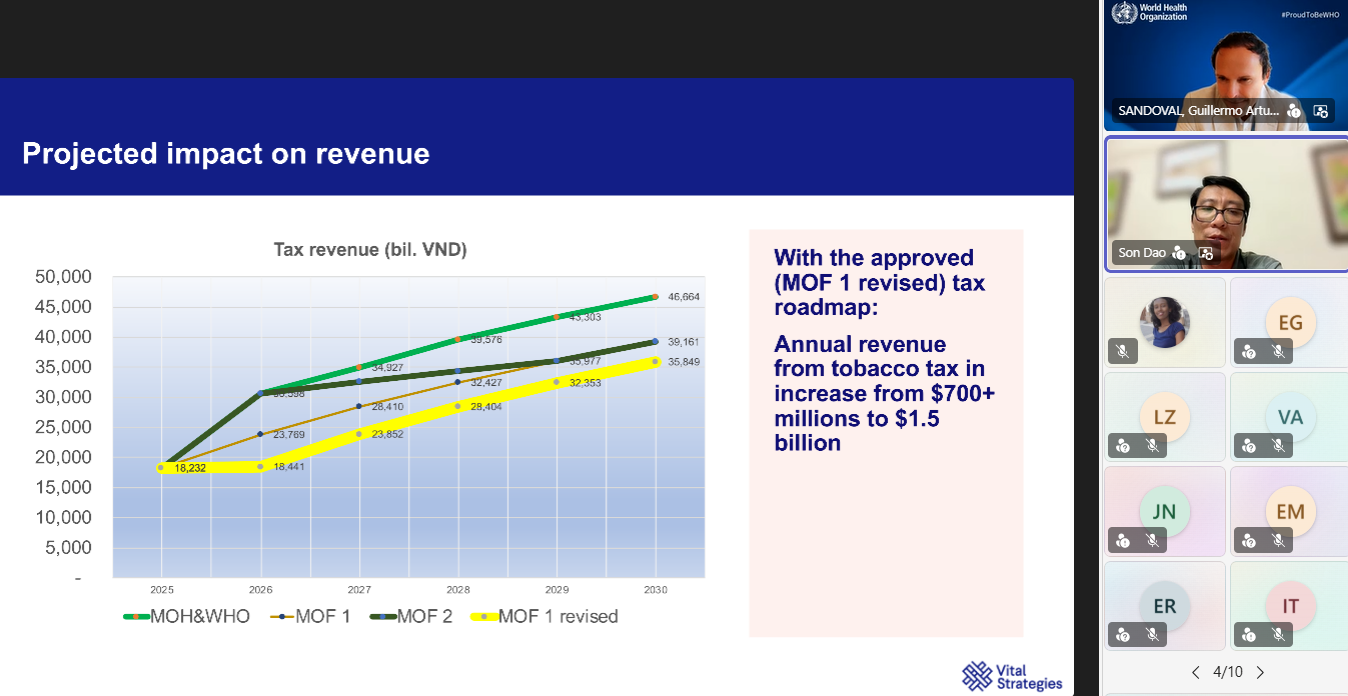
The negotiations focused on the size of that specific tax. While the Ministry of Health and WHO proposed starting at VND 5,000 per pack in 2026 and increasing to VND 15,000 by 2030, the tobacco industry advocated a much lower rate of VND 1,000 rising to VND 3,000. The legislation ultimately followed a more gradual proposal from the Ministry of Finance, introducing a specific tax of VND 2,000 VND per pack in 2027, increasing to VND 10,000 by 2031, with implementation delayed by one year due to macroeconomic concerns.
Despite the more gradual approach, the projected impacts remain significant. The initial increase is expected to raise retail prices by 15%-16%, with annual real price growth of 8%- 16% thereafter, outpacing income growth. By 2031, the total tax share is projected to rise from 36% to around 56%, with the steepest relative price increases affecting the cheapest brands. Male smoking prevalence is expected to fall from 41.1% to 37.4%, preventing more than two million people from smoking compared with a scenario without the reform, while annual tobacco tax revenues are projected to roughly double to USD 1.4-1.5 billion.
Dao emphasised that the reform was underpinned by evidence designed to counter industry arguments. National data showed that employment in cigarette manufacturing declined even as production increased, while input-output modelling projected a net positive employment effect from higher tobacco taxes. Studies also found no evidence that previous tax increases had fuelled illicit trade: consumption surveys found the illicit market remained stable or declined, and illicit cigarettes often sold at higher prices than legal products. On the broader economy, research further estimated that the health costs of tobacco use amount to 1.14% of GDP, well above the combined revenue generated through tobacco sales and taxation. As global trade tensions and concerns over economic growth entered the debate, advocates increasingly framed tobacco taxation not only as a public health intervention but also as sound fiscal policy. His conclusion was that understanding the political context and adjusting the message accordingly is as important as the underlying economic evidence.
Kenya: uniform rates, earmarking and strengthening enforcement
Monicah Lekake, Assistant Manager in the Policy and Tax Advisory Division of the Kenya Revenue Authority (KRA), closed the first day by outlining Kenya’s experience in reforming tobacco taxation. Excise duty in Kenya is governed by the Excise Duty Act, with tax policy originating from the National Treasury and administration resting with KRA.
She described how Kenya's excise regime has evolved over two decades, moving from multiple price-based tiers to a single specific excise rate for cigarettes in 2023. Recent reforms also raised rates on cigars and other tobacco products, aligned taxation across filtered and plain cigarettes, updated the treatment of e-cigarette and nicotine liquids, and introduced excise duties on oral smokeless tobacco products such as Swedish-style snus. Tobacco products are also subject to VAT at 16%, import duties of 35% in the higher band, and an import declaration fee of 2.5%, although imports from within the East African Community are exempt from customs duties.
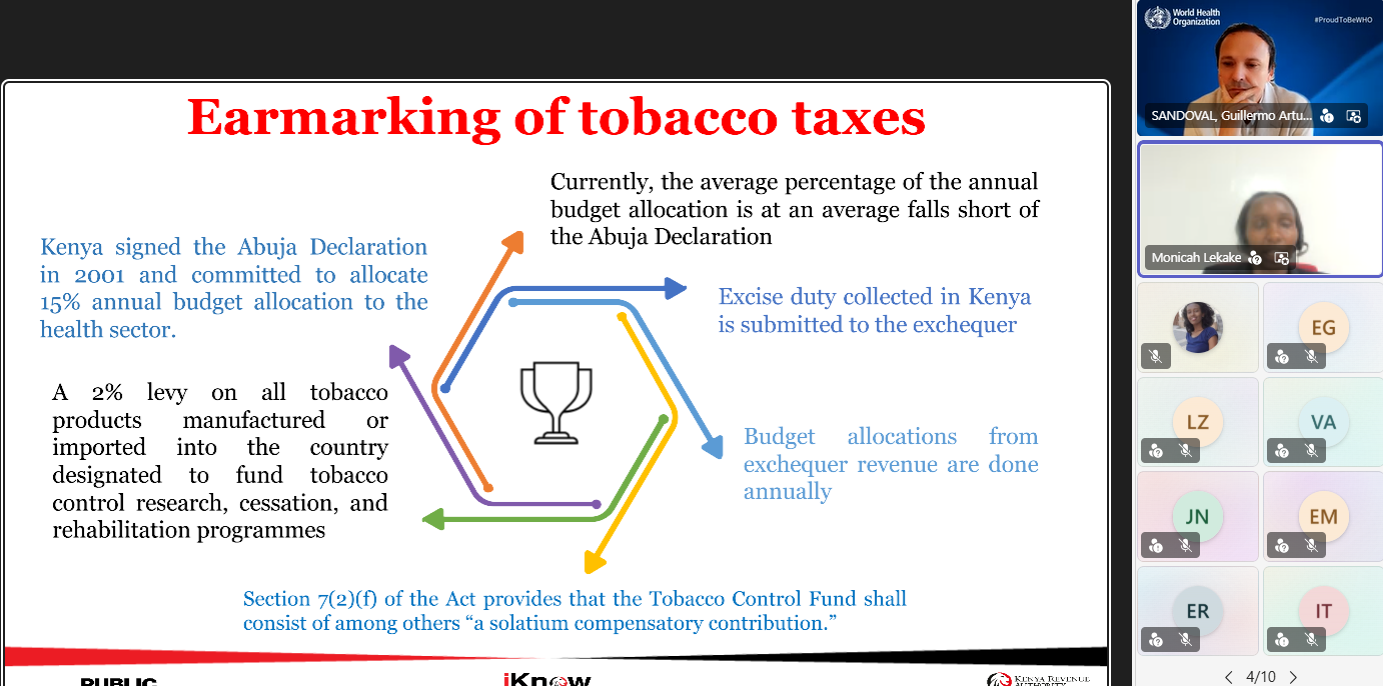
Kenya has also established a dedicating funding mechanism for tobacco control. A 2% levy on all domestically manufactured and imported tobacco products funds the Tobacco Control Fund, supporting research, smoking cessation and rehabilitation programmes, while the remaining excise revenues flow into the national budget. Health's share of the budget continues to fall short of the 15% Kenya committed to under the Abuja Declaration in 2001.
Looking ahead, Lekake identified several remaining challenges. Tobacco taxes still account for less than 50% of the retail price, significantly below the 75% WHO recommendation. Illicit trade also remains a concern, including undeclared production smuggling, counterfeit tax stamps, and the diversion of exports into the domestic market. In a response, Kenya has strengthened licensing requirements, factory controls and track-and-trace systems, while pursuing greater harmonisation of tobacco taxation across the East African Community and preparing to shift excise assessment from per mile to kilogrammes-based specific rates.
Key takeaways from Day 1
While experiences differed, the global evidence and national case studies presented during the first day of the workshop highlighted a consistent set of lessons:
Tax design matters. Simple, uniform specific excise systems are easier to administer, reduce opportunities for tax avoidance and down-trading, and are more effective in raising prices and reducing consumption.
Reforms need to keep pace. Without regular adjustments for inflation and income growth, tobacco taxes gradually lose their impact. Indexation is therefore critical to ensure reforms deliver lasting results as affordability, not the rate itself, is what changes behaviour.
Administration makes policy work. Licensing, tax samps, track-and-trace systems and effective enforcement are essential to translate tax policy into higher revenues and reduce consumption. Speakers stressed the importance of independent evidence on illicit trade.
Health taxes can advance equity. When avoided healthcare costs and productivity gains are considered, the greatest benefits accrue to lower-income populations, challenging the perception that these taxes are inherently regressive.
Political strategy is as important as evidence. Experiences showed that successful reform requires coalition-building, effective communication and anticipating industry arguments.
The second day of the workshop turned to alcohol and sugar-sweetened beverages taxation, examining how health taxes can support sustainable health financing, equity, and revenue mobilisation. A summary of those discussions is available here: From Evidence to Committed Action: Health Taxes Beyond Tobacco